Strong price growth continued in Perth in March 2026 quarter
30 June 2026"Perth was again one of the top performing capital cities for property price growth in the March 2026 quarter, reflecting ongoing strong demand and a low-listings environment."
Perth was again one of the top performing capital cities for property price growth in the March 2026 quarter, reflecting ongoing strong demand and a low-listings environment.
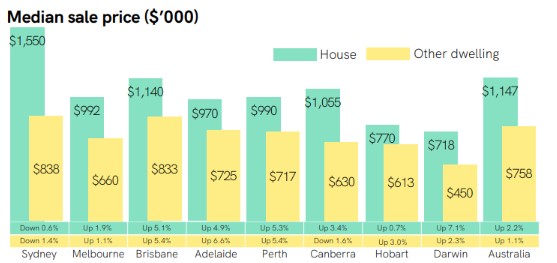
According to the latest Real Estate Institute of Australia (REIA) Real Estate Market Facts report, Perth's median house sale* price increased 5.3 per cent over the quarter to $990,000. This was 23.8 per cent higher than the same time last year.
The median sale price* for other dwellings, which includes home units, townhouses, flats/apartments and terrace homes, rose 5.4 per cent over the quarter to $717,000. This represented annual growth of 28.0 per cent.
REIWA President Suzanne Brown said the very strong growth over the quarter and year reflected the ongoing imbalance between supply and demand.
“The second half of 2025 was characterised by lower-than-average new listings and strong demand, which saw price growth accelerate,” she said.
“This continued into early 2026, maintaining the significant upward pressure on property prices.
“However, the number of new listings per week started to increase at the end of March, properties have been coming to market in reasonable numbers since then. This has eased the supply constraints in the market.
“A number of other factors, including three interest rate rises, uncertainty surrounding the ongoing conflict with Iran, and the tax changes in the Federal Budget, have had an effect on market sentiment and softened demand.
“As a result, we are likely to see reduced growth in the June quarter.”
Median house sale prices: Perth and regional centres
In the March 2026 quarter, median house sale prices increased across all Perth regions.
Perth Outer recorded the strongest growth (up 6.9 per cent to $930,000), followed by Perth Middle (up 3.7 per cent to $1,250,000) and Perth Inner (up 2.1 per cent to $1,950,000).
Across regional WA, Albany was the top performer (up 10.6 per cent to $835,000), followed by Bunbury (up 7.5 per cent to $777,000) and Broome (up 5.0 per cent to $840,000).
All Perth regions recorded median house sale price growth over the year: Perth Middle (up 32.8 per cent), Perth Outer (up 24.0 per cent) and Perth Inner (up 21.9 per cent).
In the regions, Albany recorded the strongest annual growth (up 27.5 per cent), followed by Bunbury (up 18.6 per cent) and Broome (up 10.6 per cent).
Median other dwelling sale prices: Perth and regional centres
Median sale prices for other dwellings also increased across all Perth regions in the March quarter.
Perth Outer recorded the strongest growth (up 8.0 per cent to $642,500), followed by Perth Middle (up 6.5 per cent to $740,000) and Perth Inner (up 2.7 per cent to $750,000).
Across regional WA, Bunbury recorded the strongest growth (up 14.5 per cent to $630,000), followed by Albany (up 13.7 per cent to $517,500), while Broome declined 7.7 per cent to $480,000.
Over the year, all Perth regions recorded strong growth, led by Perth Outer (up 31.1 per cent), followed by Perth Middle (up 29.8 per cent) and Perth Inner (up 25.0 per cent).
In the regions, Bunbury recorded the strongest annual growth (up 38.5 per cent), followed by Albany (up 25.6 per cent), and Broome (up 3.3 per cent).
Rental market
Median weekly rent
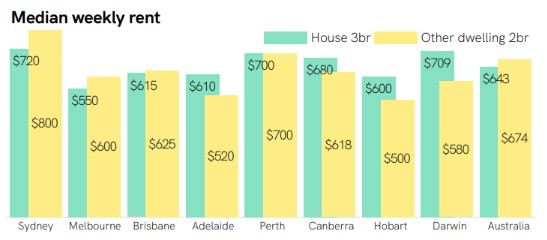
The median weekly rent for three-bedroom houses in Perth increased 2.9 per cent over the March 2026 quarter to $700. This was 7.7 per cent higher than the same time in 2025.
The median weekly rent for two-bedroom other dwellings increased 3.7 per cent over the quarter to $700. This was also 7.7 per cent higher than a year earlier.
“The rental market remains challenged,” Ms Brown said.
“While price growth was relatively low in 2025, it accelerated in the March quarter, reflecting the continued imbalance between supply and demand. The imbalance can also be seen in the tightening of Perth’s vacancy rate since the start of the year.
“We have grave concerns for rental supply and tenants following the rental reforms announced by the State Government in May and the changes to negative gearing and the capital gains tax discount announced in the Federal Budget.
“Before these announcements, we saw an increased number of investors looking to sell. While many have now adopted a wait-and-see approach, potential investors are very hesitant to purchase a rental property.
“While you might say this is great news for owner occupiers looking to buy a property, it’s not good news for tenants.
“WA desperately needs more rental properties. Our state is still experiencing strong population growth, which is one factor driving rental demand, and there will always be demand from those who prefer to rent or cannot afford to buy.
“Discouraging investment is not a win for tenants.”
Median three-bedroom house rent prices: Perth and regional centres
Over the March 2026 quarter, the median weekly rent for three-bedroom houses increased across all Perth regions.
Perth Middle recorded the strongest growth (up 6.7 per cent to $800), followed by Perth Inner (up 3.4 per cent to $900) and Perth Outer (up 2.9 per cent to $700).
Across regional WA, Bunbury recorded the strongest growth (up 5.4 per cent to $680), followed by Albany (up 1.9 per cent to $670), while Broome declined 12.0 per cent to $1,100.
Over the year, median weekly rent prices increased across all Perth regions: Perth Outer (up 7.7 per cent), Perth Middle (up 6.7 per cent) and Perth Inner (up 5.9 per cent).
All regional centres also recorded annual growth, led by Albany (up 21.8 per cent), followed by Bunbury (up 13.3 per cent) and Broome (up 4.8 per cent).
Median two-bedroom other dwelling rent prices: Perth and regional centres
Over the quarter, the median weekly rent for two-bedroom other dwellings increased in Perth Inner (up 7.1 per cent to $750) and Perth Middle (up 2.9 per cent to $700), while remaining stable in Perth Outer at $600.
Across regional WA, median weekly rents increased in Broome (up 18.1 per cent to $850) and Bunbury (up 2.6 per cent to $600). No result was recorded for Albany.
Over the year, median weekly rents increased across all Perth regions, led by Perth Middle (up 7.7 per cent), followed by Perth Inner (up 7.1 per cent) and Perth Outer (up 5.3 per cent).
Median weekly rents also increased in Bunbury (up 25.0 per cent) and Broome (up 13.3 per cent) over the year. No result was recorded for Albany.
Vacancy rate
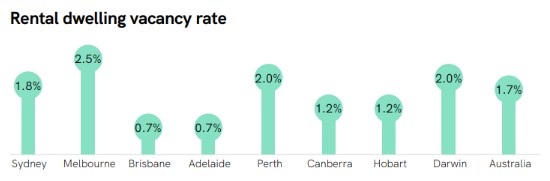
Perth's vacancy rate decreased to 2.0 per cent in the March 2026 quarter.
This was 0.6 percentage points lower than the December 2025 quarter and 0.5 percentage points lower than the same time last year
Over the quarter, vacancy rates also decreased in Sydney, Brisbane, Adelaide, Canberra, Hobart, and Darwin. Melbourne’s vacancy rate increased slightly.
*The Real Estate Institute of Australia’s Real Estate Market Facts publishes median sale prices based on the settled sale of houses and other dwellings during the referenced quarter. REIWA publishes annual median sales prices based on pending and settled sales over a 12-month period.