Kalgoorlie-Boulder led regional house price growth in June 2026 quarter
19 August 2026"REIWA Regional Spokesperson Peta McKenzie said after being in the shadow of other regional centres, it was Kalgoorlie-Boulder’s time to shine."
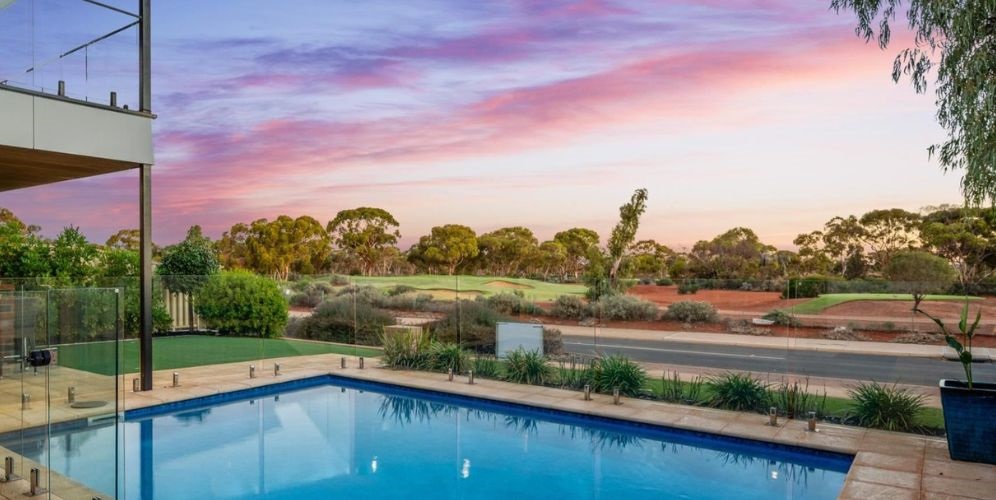
Kalgoorlie-Boulder was the top performing regional centre for median house sale price* growth in the June 2026 quarter, according to the latest data from REIWA.
Its median house sale price rose 9.4 per cent to $484,500 over the three months to June, up from $443,000 in the March 2026 quarter.
REIWA Regional Spokesperson Peta McKenzie said after being in the shadow of other regional centres, it was Kalgoorlie-Boulder’s time to shine.
“The Kalgoorlie-Boulder regional centre has been performing well for some time but has been overshadowed at various times by stronger-performing regions such as Busselton, Albany, Bunbury and Geraldton,” she said.
“It came to the fore in the June 2026 quarter with an incredible growth rate of 9.4 per cent. Despite this, it’s still a very affordable area for home buyers and investors.”
Ms McKenzie said demand for established homes was expected to remain strong due to the relative affordability of property, the potential for positive gearing and good yields for investors, and constraints on new home construction.
“The Kalgoorlie-Boulder market has an interesting dynamic,” she said.
“It’s a mining town, but while other mining areas are being driven by new projects or significant government infrastructure works, there have been no recent project announcements that would drive interest in the area.
“Instead, while Perth and some regional centres have seen investor activity decline in the wake of the Federal Government’s changes to negative gearing and the capital gains tax discount, investors have remained active in the Kalgoorlie-Boulder market.
“In part, this reflects a small flurry of activity ahead of the ban on SMSF borrowing for investment properties, however, investors overall remain attracted to the region for its affordable homes and the opportunities for properties to be positively geared. Since the Federal Budget, REIWA members have seen increased interest in the area from investors around WA and across the nation.
“Owner occupier activity is also strong. As Perth and other regions become less and less affordable, people are starting to look to more affordable areas, such as Kalgoorlie-Boulder.
“When you combine this with the opportunity for well-paying jobs, it makes moving to the region very attractive. It’s a particular drawcard for families in the mining industry who want to be able to live on one income.
“Many people move to the area and rent, thinking they’ll stay for a short time. Instead, they set down roots, buy a home and stay long-term.
“The City of Kalgoorlie-Boulder has also been engaging in an advertising campaign, SoKal, to highlight the benefits of living in the region, which is helping attract people to the area.”
Ms McKenzie said challenges in the new homes market were supporting demand for established homes in the Kalgoorlie-Boulder regional centre.
“Our members tell us there are builders available and costs are reasonable. The issue is the delay in new land releases,” she said.
“Members say builders are buying parcels of land themselves and building units to maintain a flow of work.”
Albany was the top performing regional centre over the year, with its median house sale price increasing 23.4 per cent since the June 2025 quarter to $790,000. It just outperformed Kalgoorlie-Boulder, which recorded 21.1 per cent growth in the 12 months to June.
“While the region continues to record strong growth, the rate of growth appears to be declining,” Ms McKenzie said.
“Members report buyer activity eased in the June quarter, which is typical for the winter months.
“The seasonal softening has been compounded by a reduction in investor activity following the taxation changes announced in the Federal Budget.
“First home buyers have also taken a step back. It’s difficult for them to save a deposit, especially when renting. And with the regional price threshold set at $600,000 for the Australian Government’s 5% Deposit Scheme, many do not qualify for assistance through this program.
“However, local buyers looking to upgrade or downsize remain active, and there is still interest from Perth buyers who like the lifestyle on offer and see good value in the region.”
Ms McKenzie said members considered the Albany regional centre’s market to be transitioning to more stable conditions, with more properties on the market, homes taking longer to sell and price growth easing.
“While factors like the cost of living, interest rate rises and the potential for more, and taxation changes are affecting buyer confidence right now, the challenges of building a new home, including the limited availability of land, building costs and timeframes, continue to support demand in the established homes market,” she said.
All regional centres recorded median house sale price growth over both the quarter and year.
Median house price growth
| Regional centre | Median house sale price | Three-month change | 12-month change |
| Albany | $790,000 | +4.8% | +23.4% |
| Broome | $815,000 | +2.8% | +6.5% |
| Bunbury | $740,000 | +3.5% | +16.1% |
| Busselton | $1,097,500 | +4.5% | +20.6% |
| Esperance | $610,000 | +4.3% | +19.6% |
| Geraldton | $623,600 | +3.9% | +18.8% |
| Kalgoorlie-Boulder | $484,500 | +9.4% | +21.1% |
| Karratha | $755,000 | +4.4% | +19.8% |
| Port Hedland | $595,000 | +0.8% | +14.4% |
* REIWA publishes an annual median sale price based on pending and settled sales.
Regional rental market
In the rental market, the median weekly rent price rose in six regional centres over the June 2026 quarter. It was unchanged in one regional centre, and declined in two.
Port Hedland was the top performing regional centre, with the median weekly rent increasing 26.3 per cent over the quarter to $1,200. The median rent price was still well below the record of $2,100 per week set in the December 2012 quarter.
Ms McKenzie said demand for rental properties in the Port Hedland regional centre remained strong, creating upward pressure on prices.
“REIWA members in the region say the vacancy rate is very low, with some reporting vacancy rates of around 1 per cent or less,” she said.
“Strong demand and the low availability of properties are driving rent price growth.
“Demand is mostly being driven by mining companies, businesses that subcontract to mining companies, and government departments.
“There is a significant amount of work underway in the region and large companies and government departments usually look to the rental market to house their employees.
“Strong demand, the relatively low cost of housing, and high rent prices make the Port Hedland regional centre an attractive option for investors, particularly following the Federal Government’s changes to taxation policy.
“Currently, investors have taken a step back, but members expect their confidence will increase once they become comfortable with the changes and will return to the market.”
Ms McKenzie said, while there was a large increase in median rent prices in the June quarter, members in the Port Hedland region were not expecting such significant growth to continue in the coming months.
“As Port Hedland is a resource-driven area, it is generally dependent on new projects for growth and there are no imminent projects that will boost demand in the short term.
“However, this could change as there are some potential projects on the horizon, which may boost demand should they proceed.”
The Esperance regional centre recorded the strongest rent price growth over the year.
Ms McKenzie said the Esperance regional centre’s rental market remained constrained.
“As the market is challenged, tenants hold on to the properties they have and very few properties become available for lease each quarter. At the end of the June quarter, there were only five properties advertised for rent on reiwa.com,” she said.
“This causes a number of issues for the community. For example, businesses cannot secure staff because potential employees cannot find housing. This then affects the services those businesses can offer.
“The low number of leases can also skew the data, depending on what has been leased each quarter.
“Unfortunately, the supply issue is unlikely to ease. While there is strong demand, Esperance is not as attractive to investors as some of the other regional markets. You don’t see the level of company leases like you do in Port Hedland, Karratha and Broome. So, you are unlikely to get a higher-paying tenant.
“And when compared to neighbouring Kalgoorlie-Boulder, its median house sale price is higher, yet the median rent price is lower. For investors looking at the numbers, Kalgoorlie-Boulder is a more appealing prospect.”
Median weekly rent
| Regional centre | Median weekly rent | Three-month change | 12-month change |
| Albany | $700 | +4.5% | +18.6% |
| Broome | $1,100 | 0.0% | -8.3% |
| Bunbury | $658 | -3.3% | +1.2% |
| Busselton | $800 | -5.9% | +2.6% |
| Esperance | $650 | +20.4% | +38.3%** |
| Geraldton | $600 | +9.1% | +9.1% |
| Kalgoorlie-Boulder | $700 | +0.7% | +7.7% |
| Karratha | $1,500 | +3.4% | +15.4% |
| Port Hedland | $1,200 | +26.3% | +26.3% |
**Based on a low number of leases.

.tmb-rcarousel.png?sfvrsn=9c4025fb_1)

.tmb-rcarousel.png?sfvrsn=66a686a5_1)