
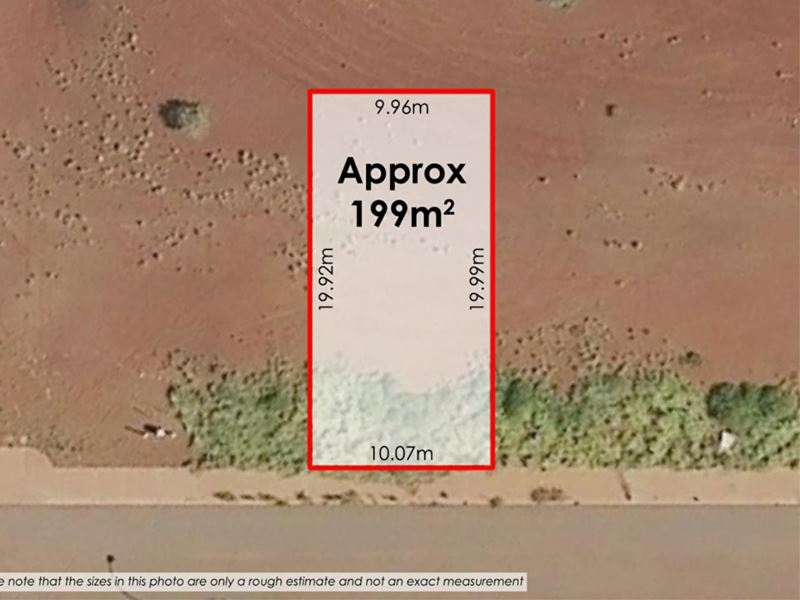
7 Talbot Road, Newman WA 6753
$45,000
-
Landsize 200m2
Land
View
Secure Your Slice of Newman's Future
Position yourself in one of Western Australia's iconic mining hubs with this approximately 200sqm vacant block at 7 Talbot Road, Newman. Whether you're looking to landbank for future growth or secure an affordable entry into a resource-driven market, this is an opportunity with long-term potential.
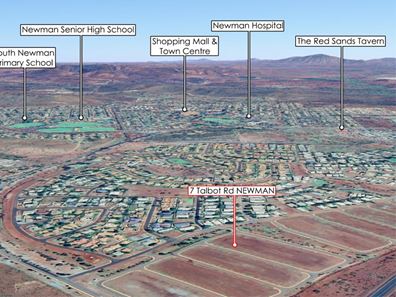
Situated in an established residential precinct, the property enjoys convenient access to the town's key amenities, supporting its ongoing appeal to workers, residents and future development.
Location Highlights:
• Minutes to Newman's Shopping Centre & Town Centre
• Close to Newman Hospital
• Nearby South Newman Primary School & Newman Senior High School
• Easy access to The Red Sands Tavern
• Established neighbourhood close to everyday amenities
With affordable land becoming increasingly scarce in established mining communities, this is your chance to secure a strategic holding in one of the Pilbara's most recognised resource towns.
Contact Morgan Ramasamy on 0450 008 638 or email at [email protected] today for more information.
DISCLAIMER: The information contained herein has been supplied to us and we have no reason to doubt its accuracy, however we cannot guarantee it. Accordingly, all interested parties should make their own enquires to verify the information.
Listing snapshot by reiwa.com
This land listing located in Newman has been listed for sale by Morgan Ramasamy at LJ Hooker Harrisdale.
If you would like to get in touch with Morgan Ramasamy regarding this listing, please call 0450 008 638 or contact the agent via email.
Nearby schools
Newman overview
Newman is a mining company townsite in the Pilbara region, 1184 kilometres northeast of Perth. The townsite was gazetted in 1972 after the Mount Newman Mining company developed a large iron ore mine at Mount Whaleback. The townsite is named after the nearby Mount Newman, a 1055 meter high mountain in the Ophthalmia Range.
Mount Newman was named by the surveyor W F Rudall in 1896, "in honour of our late leader". Newman was Aubrey Woodward Newman, the original leader of the survey party carrying out surveys in the neighbourhood of the Ophthalmia Range in 1896. He contracted typhoid fever at Peak Hill and, too ill to continue, was later returned to Cue where he died on May 24th, 1896.
Newman quick stats
High end
$550k
Median
$430k
Low end
$370k
22.9 %
Annual growth
$430k
Annual median sales price
$850pw
Annual median rental price